Key Takeaways
Commercial Turf Installation Imperial Beach projects perform best when the “invisible” details—site evaluation, sub-base compaction and grading, and a clear drainage exit path—are planned before turf goes down. Comparing proposals by scope assumptions (base thickness, drainage provisions, seam method, and edge restraint) helps avoid underbuilt systems that can fail under coastal moisture and commercial traffic.
- Site evaluation prevents common failures: A thorough walk and measure that maps drainage behavior, traffic load, and edge interfaces helps avoid soft subgrade, inconsistent base thickness, and seam placement in walk lines that can lead to pooling, wrinkles, or seam and edge problems.
- Sub-base and drainage drive long-term performance: In coastal conditions, installers typically excavate to suitable subgrade, compact base material in measured lifts, fine-grade for consistent runoff, and use site-dependent drainage options (surface grading, drains, rock zones, or mats when elevation is limited) so water has a predictable path out of the system.
- Seams, edges, and proposal clarity determine durability and cost: Commercial installs often win or fail at seams and transitions, so bids should clearly state seam method and placement, edge restraint details at curbs/planters/pavers, and included assumptions for excavation, compaction approach, drainage tie-ins, and access constraints rather than relying on square footage alone.
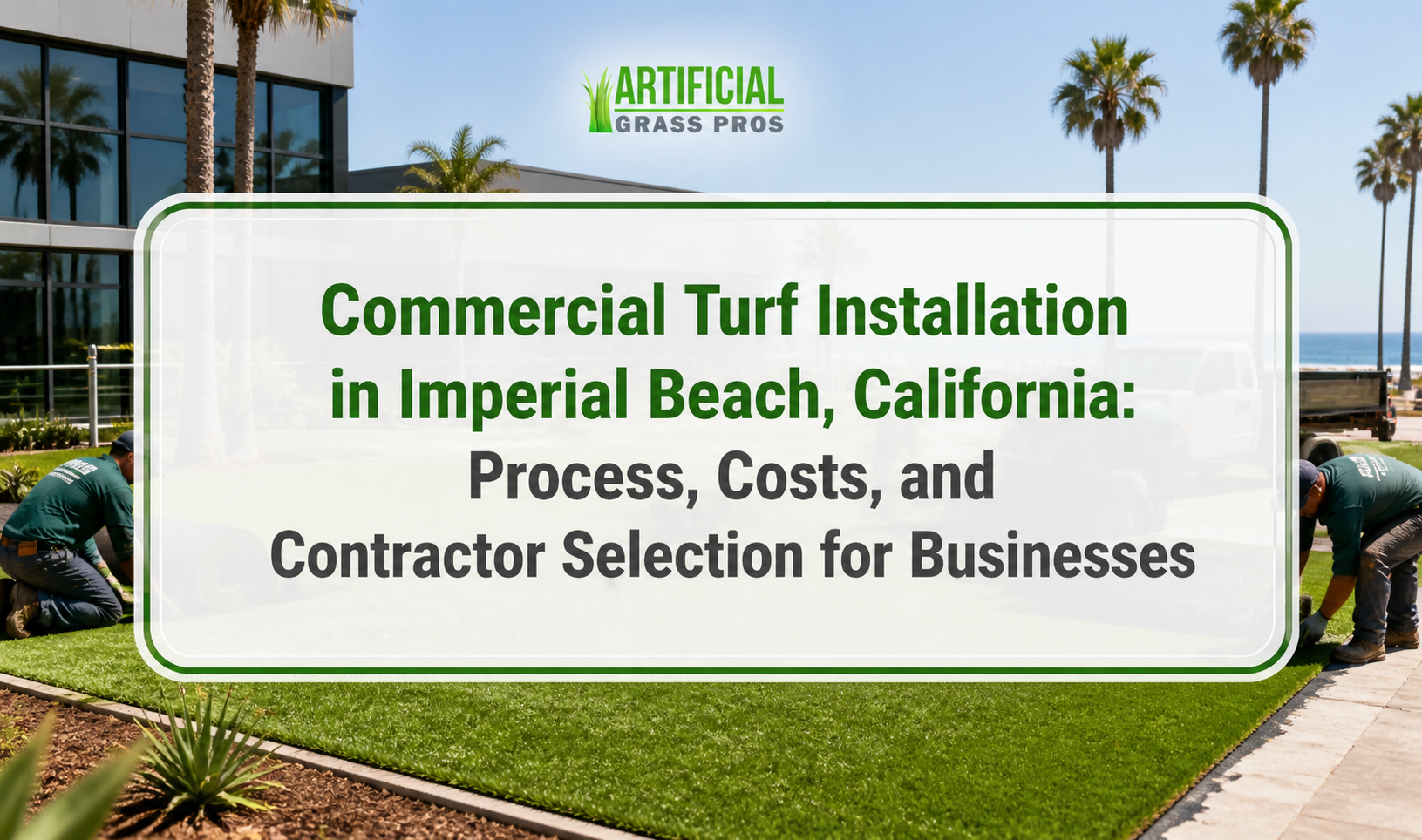
Commercial Turf Installation Imperial Beach projects help businesses replace worn natural grass with a consistent, low-maintenance surface by evaluating the site, preparing a stable base, installing turf and infill, and finishing edges and drainage details for long-term performance.
In a coastal environment like Imperial Beach, proper sub-base compaction, grading, and water management are critical to prevent pooling, odors, and premature seam or edge failure in high-traffic areas such as storefront frontage, common areas, pet relief zones, and small courtyards. Commercial installations also need to account for access routes, work-hour constraints, and safety practices when handling cutting tools, compactors, and adhesives.
This guide breaks down the typical installation process, what drives total cost (materials, site prep, drainage, and access), and how to compare contractors for commercial experience, warranties, and installation standards without overpaying or sacrificing durability.
How Commercial Turf Installation Works in Imperial Beach
Commercial Turf Installation Imperial Beach projects typically follow a repeatable sequence: assess the site, build a stable base, install and seam turf, add infill where appropriate, and finish edges and drainage details for long-term performance.
While every property is different, commercial sites usually add constraints that don’t show up in residential work—like limited access corridors, higher foot traffic, delivery routes, and the need to keep customer areas safe and usable. In coastal conditions, installers also need to pay close attention to grade, compaction, and drainage so the system doesn’t shift, pond, or develop odor issues over time.
- Site walk and measuring (including slopes, runoff paths, and access)
- Demo and excavation (remove existing sod/base and unsuitable soils)
- Sub-base build (import base material, compact in lifts, verify grade)
- Drainage provisions (surface grading, optional drain lines or drain rock zones)
- Turf layout (grain direction, minimizing seams in traffic lanes)
- Seaming and fastening (adhesives/tape or other seam systems as specified)
- Infill application (when required for stabilization/cushioning)
- Edge restraint and transitions (concrete, bender board, mow strip, caps)
- Final grooming, cleanup, and turnover instructions
Site Evaluation: The Step That Prevents Most Failures
A good site evaluation identifies drainage risk, traffic patterns, and base requirements before any excavation starts, reducing costly change orders and rework.
Commercial turf failures are often traceable to the “invisible” parts: soft subgrade, inconsistent base thickness, or a layout that places seams where carts, strollers, or foot traffic repeatedly stress them. The evaluation should include checking downspouts, irrigation overspray, and where stormwater currently travels during heavy rain.
What installers look for on a commercial site
Installers typically document constraints and performance needs that directly affect materials, labor, and schedule.
- Drainage behavior: low spots, hardpan areas, runoff concentration points, existing drains, and signs of past pooling
- Traffic load: foot traffic vs. rolling loads (maintenance carts, deliveries, ADA routes)
- Edges and interfaces: storefront thresholds, pavers, curbs, fences, planters, and utility lids
- Access limitations: narrow gates, stairs, elevator-only roof decks, or timed delivery windows
- Use case: decorative frontage, break area, pet relief zone, play area, or putting green
If your project includes specialized use (like pet areas or impact attenuation), it helps to decide that up front so the base design and turf selection match the performance goal.
Sub-Base Prep in Coastal Conditions: Compaction, Grade, and Stability
In Imperial Beach, stable compaction and consistent grading are essential because moisture and high use can expose weak spots quickly.
Commercial installations often prioritize a firm, well-draining base that resists rutting and maintains smoothness. The exact base spec varies by site, but the principles are consistent: remove organics, correct unstable soils, compact in layers (“lifts”), and maintain a grade that directs water where it should go.
Typical commercial base-building sequence
Base prep generally follows a layered approach to create a flat, load-bearing surface.
- Excavate: remove sod, roots, and soft material to reach suitable subgrade
- Proof-roll and correct: identify pumping/soft areas and remove/replace as needed
- Install base material: add aggregate base in measured lifts
- Compact: compact each lift thoroughly before adding the next
- Fine grade: shape for proper runoff and consistent surface
- Optional underlayment: install where cushioning, separation, or smoothing is needed
Because commercial areas are visible and heavily used, “close enough” grading can show up later as wrinkles, birdbaths (shallow puddles), or uneven wear patterns.
Drainage Planning for Commercial Turf Areas
Drainage design helps prevent pooling, odors, and seam/edge stress by managing water at the surface and within the base.
Turf itself can allow water to pass through, but the system only drains as well as the base and the exit path for water. If water has nowhere to go, it can linger in low spots or migrate toward building edges—both of which can create maintenance and safety problems.
Drainage options that may be used
The best drainage solution depends on where water comes from (irrigation, rain, washdown) and where it can legally and safely exit.
- Surface grading: subtle slope away from structures and toward drains or landscape areas
- Perimeter drain rock zones: help move water away from edges in certain layouts
- Area drains or channel drains: capture water in predictable runoff paths
- French drains: can intercept and redirect subsurface water (site-dependent)
- Drainage mat systems: sometimes used when elevation is limited
Drainage planning should also consider operational needs—such as periodic rinsing in pet relief areas, or cleaning schedules in hospitality courtyards.
For additional context on preventing water issues after installation, see how to prevent drainage problems in an artificial grass lawn in Imperial Beach.
Turf Selection for Commercial Use: Matching Fiber, Face Weight, and Pile Height to the Job
Commercial turf selection should align with traffic intensity, visual goals, and maintenance realities—not just appearance in a sample book.
Different commercial zones benefit from different turf characteristics. For example, a high-traffic storefront strip may perform better with a shorter, denser profile for easier grooming, while a courtyard lounge area may prioritize a softer feel. If your project includes multiple zones, mixing turf styles can be a practical way to balance performance and aesthetics.
- Storefront and entry areas: durable, stable turf with thoughtful seam placement and strong edge restraint
- Courtyards and common areas: comfort-forward turf where grooming access is available
- Pet relief zones: turf and base designed for rinsing, drainage, and odor control
- Play areas: turf system that can be paired with impact-attenuating underlayment (project-specific)
If you’re comparing material options and want a framework for what “quality” looks like, review tips to choose high-quality materials for an artificial grass lawn in Imperial Beach.
Seams, Edges, and Transitions: Where Commercial Installs Win or Fail
Most visible turf problems show up at seams and edges, so commercial installs need stronger detailing than a simple backyard project.
Seams that open, edges that curl, and corners that lift are common complaints when traffic repeatedly hits weak points. Commercial installers typically plan turf direction (“grain”), place seams away from dominant traffic paths, and use robust fastening and adhesive methods appropriate to the site conditions.
Common edge and transition details
Edges should be restrained so the turf cannot creep, curl, or expose the base over time.
- Concrete curbs and mow strips: create a clean, durable termination line
- Bender board or composite edging: used for curved beds and landscape transitions
- Planter and wall terminations: require secure fastening and clean vertical finishing
- Pavers and hardscape interfaces: need consistent height and tight tolerances to prevent trip hazards
- Utility covers and access points: should remain serviceable without tearing turf
Edge security is a frequent long-term durability issue, especially in narrow commercial strips where foot traffic repeatedly steps on the perimeter. For practical edge-focused guidance, see tips to secure the edges of artificial grass in Imperial Beach.
Infill and Grooming: Performance, Appearance, and Heat Considerations
Infill can improve stability and fiber support, but it isn’t “one-size-fits-all” and should be selected based on use, drainage goals, and maintenance capacity.
Some commercial areas benefit from infill that helps the turf blades stand up under traffic, while others may minimize infill to simplify cleaning. In pet applications, the ability to rinse and remove debris can matter more than a highly “springy” feel.
- Why infill is used: adds ballast, supports fibers, can affect traction and play characteristics
- Why infill may be reduced or adjusted: easier cleaning, specific drainage design, or manufacturer guidance
- Grooming practices: periodic brushing, debris removal, and spot-cleaning help maintain appearance
When evaluating infill choices, ask the contractor how the proposed system will be maintained by staff (or an outside vendor) and how often grooming is expected under your traffic levels.
Commercial Work Planning: Access, Safety, and Work-Hour Constraints
Commercial turf projects often succeed or fail on logistics—especially access routes, staging, noise, and safety controls.
Unlike many residential installs, commercial sites may require early-morning work, off-hour scheduling, clear pedestrian routing, and controlled tool use around the public. Discussing these constraints early helps keep the project on schedule and reduces surprises related to hauling, dumping, and material storage.
- Access plan: where materials are delivered, where base is staged, and how debris exits the site
- Pedestrian management: cones, temporary barriers, signage, and safe detours
- Noise and vibration: compaction equipment can affect nearby tenants; schedule accordingly
- Tool safety: cutting tools, compactors, and adhesives should be handled with clear site rules
- Clean handoff: daily cleanup is especially important for retail-facing properties
Cost Drivers: What Changes the Total Price (Without Guesswork)
Commercial turf costs vary primarily based on materials, site prep complexity, drainage needs, and access constraints rather than just square footage.
Because every site is different, it’s better to compare bids by scope and assumptions instead of looking for a universal price. A lower number can mean less excavation, thinner base, fewer drainage provisions, or minimal edge restraint—choices that may not hold up under commercial use.
- Demolition and haul-away: existing concrete removal, root mass, or contaminated/unsuitable soils increase labor
- Excavation depth and base thickness: more correction work and imported base material increases cost
- Drainage work: adding drains, tying into existing systems, or building around utilities can be significant
- Turf type and roll layout: higher-end turf, complicated shapes, and added seams affect waste and labor
- Edge details: curbs, restraints, and clean hardscape transitions add durability and cost
- Access limitations: long wheelbarrow routes, stairs, or restricted delivery windows increase labor time
To make bids comparable, ask each contractor to spell out what is included for excavation depth, base material type, compaction approach, drainage provisions, seam method, and edge restraint.
Reference Table: Commercial Installation Elements to Confirm in Proposals
This checklist-style table helps you compare proposals based on scope clarity and durability factors rather than just total price.
| Proposal Item to Compare | What to Look For | Imperial Beach / Coastal Considerations |
|---|---|---|
| Excavation & disposal scope | Defined excavation depth, haul-away method, and what happens if unsuitable soil is found | Coastal moisture and soft spots can require additional correction; clarify how changes are approved |
| Sub-base build & compaction approach | Base material type, installed thickness, compaction method (in lifts), and finish grading plan | Poor compaction and inconsistent grade often show up as low spots and wrinkles after use |
| Drainage plan | How water leaves the system (surface slope, drains, rock zones), and any tie-ins to existing drainage | High-use commercial areas benefit from predictable drainage paths to reduce pooling and odor risk |
| Seams, adhesive, and seam placement | Clearly described seam method and where seams will be located on the plan | Avoid seams in primary walk lines and cart paths when possible; ask for a layout drawing |
| Edge restraint and transitions | Specific edge detail (curb, bender board, fastener spacing) and how transitions meet pavers/curbs | Edges see repeated stress in narrow commercial strips; strong restraint prevents curling and trip hazards |
Choosing a Contractor: What “Commercial-Ready” Looks Like
A commercial-ready turf installer can explain base and drainage decisions clearly, provide a scope you can compare, and plan around safety and access constraints.
When you’re comparing options, prioritize scope clarity and installation standards over sales language. If two bids use different assumptions (base thickness, drainage provisions, edge restraint), the cheaper option may not be equivalent—even if the turf product looks similar.
Questions to ask before you sign
These questions help reveal whether the installer is planning for durability and commercial use patterns.
- How will you confirm grade and compaction before turf goes down?
- Where will seams be located, and why?
- What edge restraint will be used at curbs, planters, and pavers?
- How does the drainage plan move water off-site or into existing drainage?
- What maintenance will the property need (brushing, rinsing, debris removal), and how often?
- What is covered by workmanship warranty vs. manufacturer warranty, and what maintenance is required to keep coverage valid?
If your commercial project needs a dedicated material selection process and consistent supply, review artificial grass options to align product choice with performance requirements.
Commercial Use Cases: Matching Installation Details to the Application
The best commercial turf installations tailor base, drainage, and finishing details to the site’s primary use—especially in high-traffic or high-moisture zones.
It’s common for one commercial property to include multiple turf “micro-areas” (entry strip, courtyard, pet relief corner). Treating them the same can lead to avoidable issues, like placing decorative turf in a pet zone without planning for rinse-down and drainage.
- Retail frontage: prioritize clean edges, stable transitions to sidewalks, and seam placement away from door swing/traffic
- Courtyards: plan furniture feet loads and cleaning access; choose turf height that stays neat with routine grooming
- Pet relief areas: plan for frequent rinsing, predictable drainage paths, and easy sanitation routines
- Play areas: confirm any safety and cushioning needs early so underlayment and system design match the intent
For a clear overview of what synthetic turf is and how it’s generally used, see artificial turf.
Long-Term Performance: Maintenance, Cleaning, and When to Refresh Infill
Commercial turf stays better-looking and more sanitary when maintenance is planned like a facility task, not an afterthought.
Even though synthetic grass reduces mowing and irrigation, it still benefits from routine debris removal and periodic grooming—especially in windy coastal areas where sand and organic debris can accumulate. Pet zones may need more frequent rinsing and odor-control steps than decorative courtyards.
- Weekly or as-needed: remove trash/leaves, spot clean spills, check edges in high-traffic corners
- Monthly or quarterly (site-dependent): brush high-traffic lanes to reduce matting and redistribute infill
- After storms or events: inspect seams/edges, remove silt/sand buildup, verify drainage paths are clear
If you want practical cleaning routines tailored to local conditions, reference methods for cleaning artificial grass in Imperial Beach.
Setting Your Project Up for a Smooth Install and Durable Results
The best outcomes come from aligning the intended use, base and drainage design, and installation details before work begins.
To keep a Commercial Turf Installation Imperial Beach project on track, focus on a clear scope and a plan that anticipates coastal moisture, traffic patterns, and access limitations. Ask for a drawing or written layout that shows seam locations, drainage intent, and edge restraint details so you can compare bids “apples to apples.” With the right prep and finishing, commercial turf can deliver a clean, consistent surface that holds up to daily use without the constant upkeep of natural grass.
Frequently Asked Questions
Plan a Commercial Turf Install That Holds Up to Traffic and Coastal Drainage
If you’re replacing worn grass at a storefront, courtyard, or pet relief area, a quick site review can clarify what your space actually needs—especially around grading, base stability, seam placement, and water exit paths. Getting those details right up front helps you avoid uneven spots, edge lifting, and nuisance pooling that can disrupt day-to-day use.
Artificial Lawns Imperial Beach can help you compare options with a clear scope so you know what’s included for excavation, base depth, drainage approach, and transition detailing—key factors that affect durability and maintenance demands.